My studies

01Today

Program
Certificate in artificial intelligence at work
School
Université de Montréal
Term
Fall 2026
Format
Online, evenings
Courses
4

When I finished my Retail Management program, I had a decision in front of me, and I didn't settle it quickly: go straight into the job market, or specialize. Two very different paths. On the first, I knew what was waiting for me. On the second, not at all.

The direct path was the field: a company's real problems, learned by living them. The other was going after one more layer, specializing in something I'm really interested in, and building from there.

Basically, what got things moving was realizing that a year from now, I'd be facing the same choice, but with a specialization in AI on top of my management program. That's different. I chose to specialize.

My June 13 post (new tab)

My week of classes

  1. MondayEconomics, Business and AI
  2. TuesdayNo class
  3. WednesdayIntroduction to AI
  4. ThursdayAI Law and Governance
  5. FridayApplied Generative AI

my favorites: 4 out of 4

What I'm learning, and what I do with it

Each course connects to something I already talk about, in my posts or in the way I work.

01 Monday evening

Economics, Business and AI

In class

How a technology enters a company: its processes, the real need behind the request. In teams, we build a business case for a non-technical decision-maker.

On my side

"Training people in AI is a role that's coming."

That's the role I'm aiming for: understanding the need before talking about tools, then proving what it changes, with numbers.

My plan for what's next
02 Wednesday evening

Introduction to AI

In class

What's behind AI: data, models and math. Regression, decision trees, random forests, K-means.

On my side

"AI, in practice, is a robot that predicts."

Before, I saw an x axis and a y axis without understanding how they related to AI. One class later, I made the connection. It brought me back to the sales I analyzed during my internship at Decathlon. Basically, that's what I love: data analysis.

My September 8 post (new tab)
03 Thursday evening

AI Law and Governance

In class

There is no "AI law" in Canada, but AI is already regulated: personal information (Law 25 in Quebec), contracts, liability.

On my side

"When AI gets it wrong, whose fault is it?"

During the election campaign, ChatGPT relied on an AI-generated website to advise voters. If it's wrong, who is responsible: the creator, the tool or the user? That's exactly what this course is teaching me to untangle.

The source: Radio-Canada (new tab)
04 Friday evening

Applied Generative AI

In class

Using generative AI effectively, critically and responsibly. One rule keeps coming back: a gain is measured all the way to a usable result.

On my side

1 h becomes 1 message

My class notes used to take me 1 h per class. Now, I send a single message: "I'm done with my class." For me, AI isn't about doing less. It's about doing more with the same time.

My September 28 post (new tab)

02Before

Program
Retail Management
School
Cégep Édouard-Montpetit
Diploma
May 2026
Internship
Decathlon
Courses
20
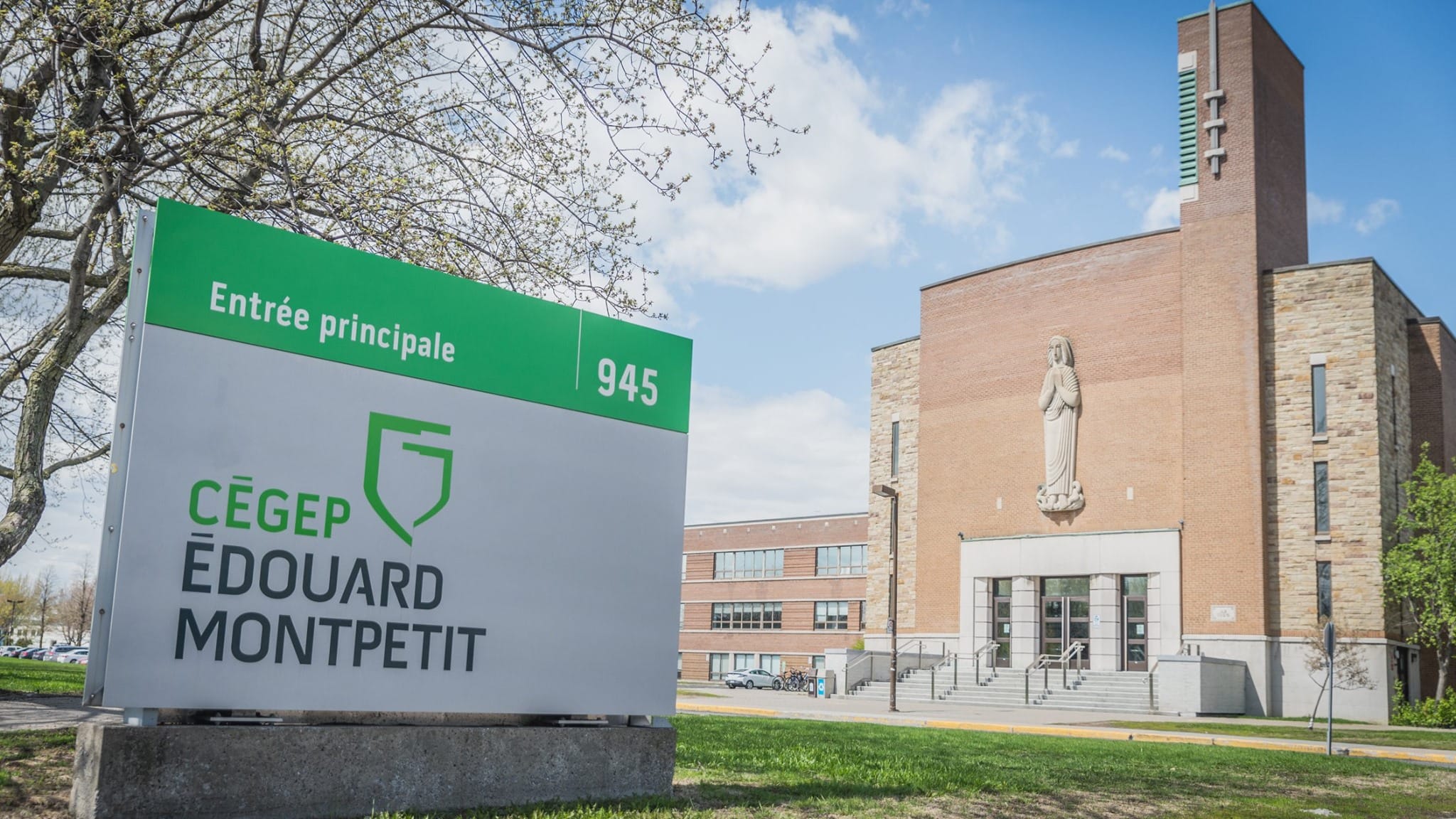
The main entrance of Cégep Édouard-Montpetit: the green and grey sign in front of the brick building

Before UdeM, there was cégep: my diploma in Retail Management, earned in May 2026. But to understand why I chose business in the first place, we need to go back a few years.

As a kid, I wanted to be a firefighter. Then in late 2020, my memes page changed everything. I discovered content creation, and with it a passion I never thought I'd have: building my own community online. My childhood dream gave way to something completely different.

When it was time to choose my program, that experience weighed heavily. I wanted to understand what makes people follow a page, buy a product, come back to a store. Retail Management was the logical next step.

A technical program is still a question mark for a lot of people. To me, it's worth a bachelor's degree, and here's why.

An overview of everything that keeps a business running

my favorites

In Marketing Strategies, we had an oral presentation every two weeks, so 7 or 8 over the term. The thing is, I learn through logic and the why, not by heart. Standing in front of the class and explaining my reasoning is the best way I've found to learn in the field.

During my program, I had several projects to do. There are 2 I really enjoyed, because each one opened my eyes to something: advertising for the first, data analysis for the second.

Here they are:

01CoursePromotion(favorite)

Product and service promotion and mass media

Client
Héma-Québec
My role
Team member
Deliverables
Campaign: social media, radio, TV, billboards

Project summary:

A campaign for Héma-Québec on human tissue donation and plasma donation

In my Promotion course, we had to build a communication campaign for Héma-Québec. The brief: raise awareness and inform the public about human tissue donation and plasma donation, and above all, make people want to take action.

The concept starts from an object everyone understands. In the ad, two people find a card signed by Maurice Richard and wonder how much it's worth: "A Maurice Richard signature is worth $1,000." Then the message turns to the person watching: "Your signature is worth 20 lives."

The campaign ran across several media: social media, radio, television and billboards. For each one, we had to choose the right message and the right format, while respecting the budget and deadlines. The goal: increase the number of tissue donation consents for Héma-Québec.

This project is when I started to really pay attention to traditional advertising. I'd analyze Héma-Québec's ads, listen to the ones on the radio, and on the highway, I'd look at the billboards wondering what the company had wanted to put in them.


02CourseLayout(favorite)

Layout and presentation of products and services

SSENSE

Client
SSENSE, Quartier Dix30 (Brossard)
My role
Team member
Deliverables
Market study, layout concept, product selection

Project summary:

A new SSENSE store at Quartier Dix30, in Brossard

In my Layout course, we had to imagine a new SSENSE store at Quartier Dix30. Before proposing anything, we needed to know whether SSENSE belonged in Brossard: market study, local and international competitors, current trends, consumer expectations and behavior.

The market study is precisely the part I enjoyed most. That's when I realized I loved data analysis in service of a business: starting from the numbers to answer a real question, like whether a SSENSE could work well here.

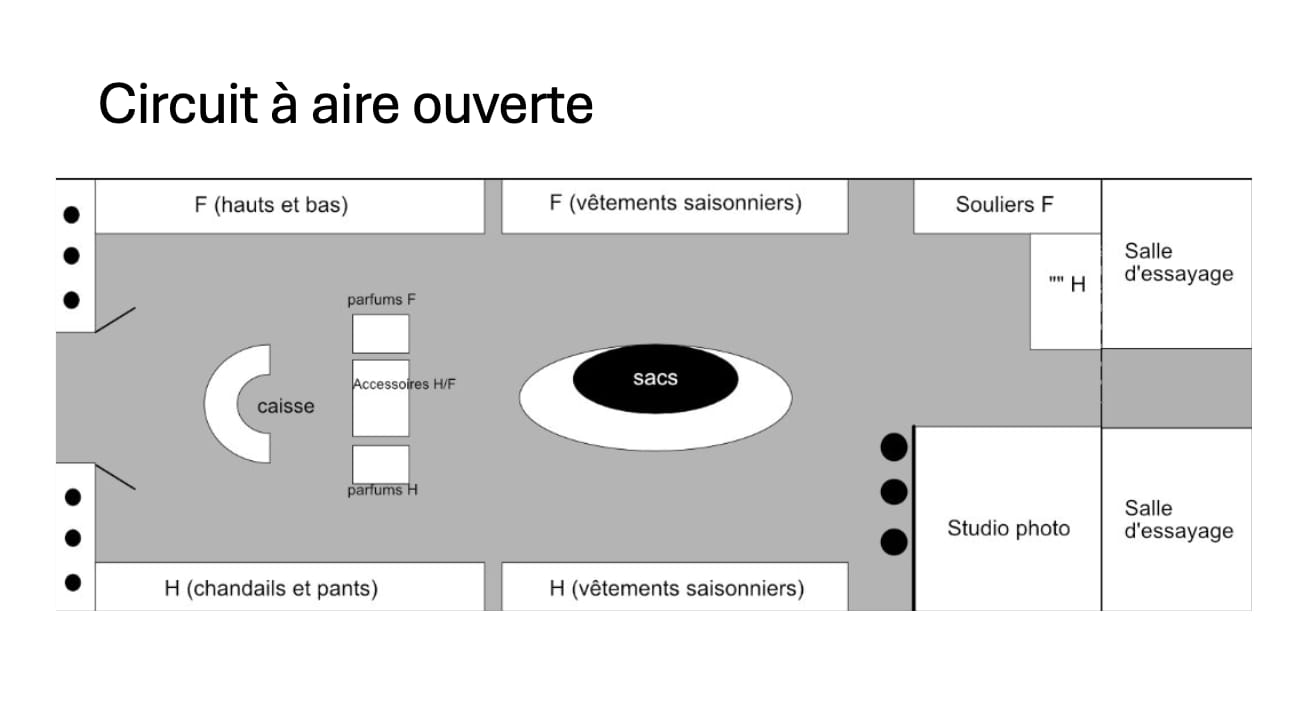
Our proposal came down to three ideas: an open-plan layout, a styling service and a photo studio in the store. We also selected the clothing, shoes and accessories, thinking about the experience customers come looking for at SSENSE.